Massive Summer Offer: Limited-Time Discount - Flat upto 20% offer on all plans
Hybrid Mode of Working has received significant attention in almost all organizations now. Traditionally, people commuted to their workplace 5 days a week and worked from the office but now that mode of work is shifting to a combination of working from home and work from office, a hybrid working model.
What initially began as a response to COVID-19 is sustaining rapid attention and becoming a long-term working model for most of the organizations. So, while employees have greater freedom in deciding their mode of work, sustained pressure has been on office management to arrange spaces for them according to utilization because we now can’t allocate spaces only based on the total number of employees.
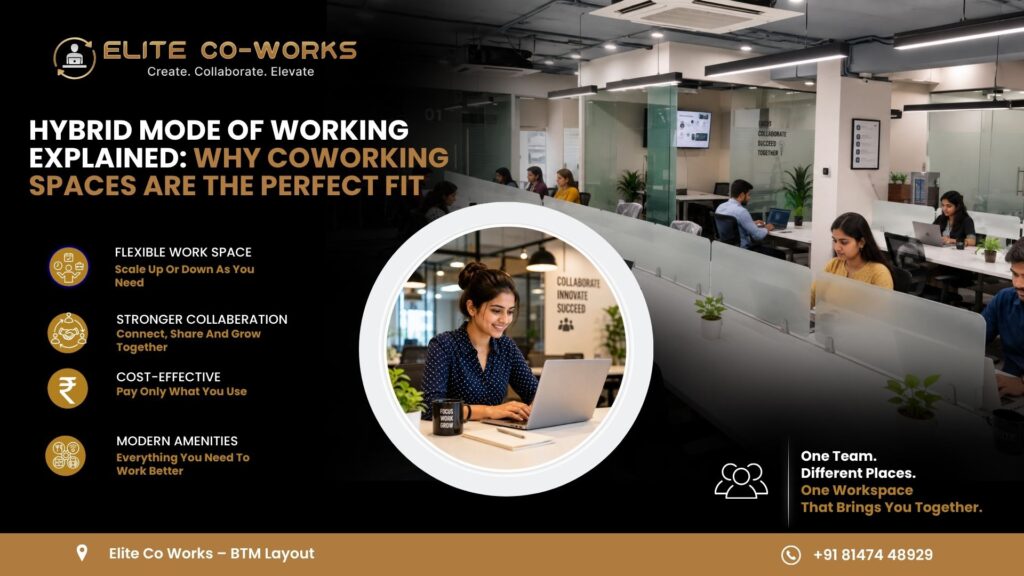
This shift is where coworking spaces can offer practical solutions. With flexible workstations, shared facilities, and access based on changing requirements, coworking spaces allow organizations to adapt their workspace without being tied to a large, permanent office. As hybrid working continues to grow, coworking spaces are becoming an increasingly suitable fit for the changing needs of modern workplaces.
Simply, hybrid work means splitting time between home and the office instead of picking one or the other full-time. Some teams settle into a rhythm, two days in, three days out. Others just let people choose, week to week, based on whatever that week actually needs. There’s no single template here, honestly, and that’s kind of the whole point. It bends around real life instead of forcing life to bend around a fixed 9-to-5 grid.
So why’s this taken off so fast? A few reasons, really. People got a real taste of flexibility during lockdown and, shocker, didn’t want to give it back once offices reopened. If you saved two hours a day not commuting, would you happily hand that time back? Didn’t think so. Companies also noticed productivity didn’t tank the way managers braced for, which quietly killed the biggest argument against hybrid in the first place. And let’s be honest, offering hybrid work has turned into one of the easiest ways to actually win at hiring right now, especially with younger candidates who walk into interviews expecting it as a baseline, not asking for it as a favor.
There’s a money angle too, one companies don’t love admitting out loud. Fewer people commuting in daily means less pressure on office capacity, and handled right, that can actually cut costs instead of adding to them. Probably the real reason hybrid outlasted the pandemic urgency that first created it.

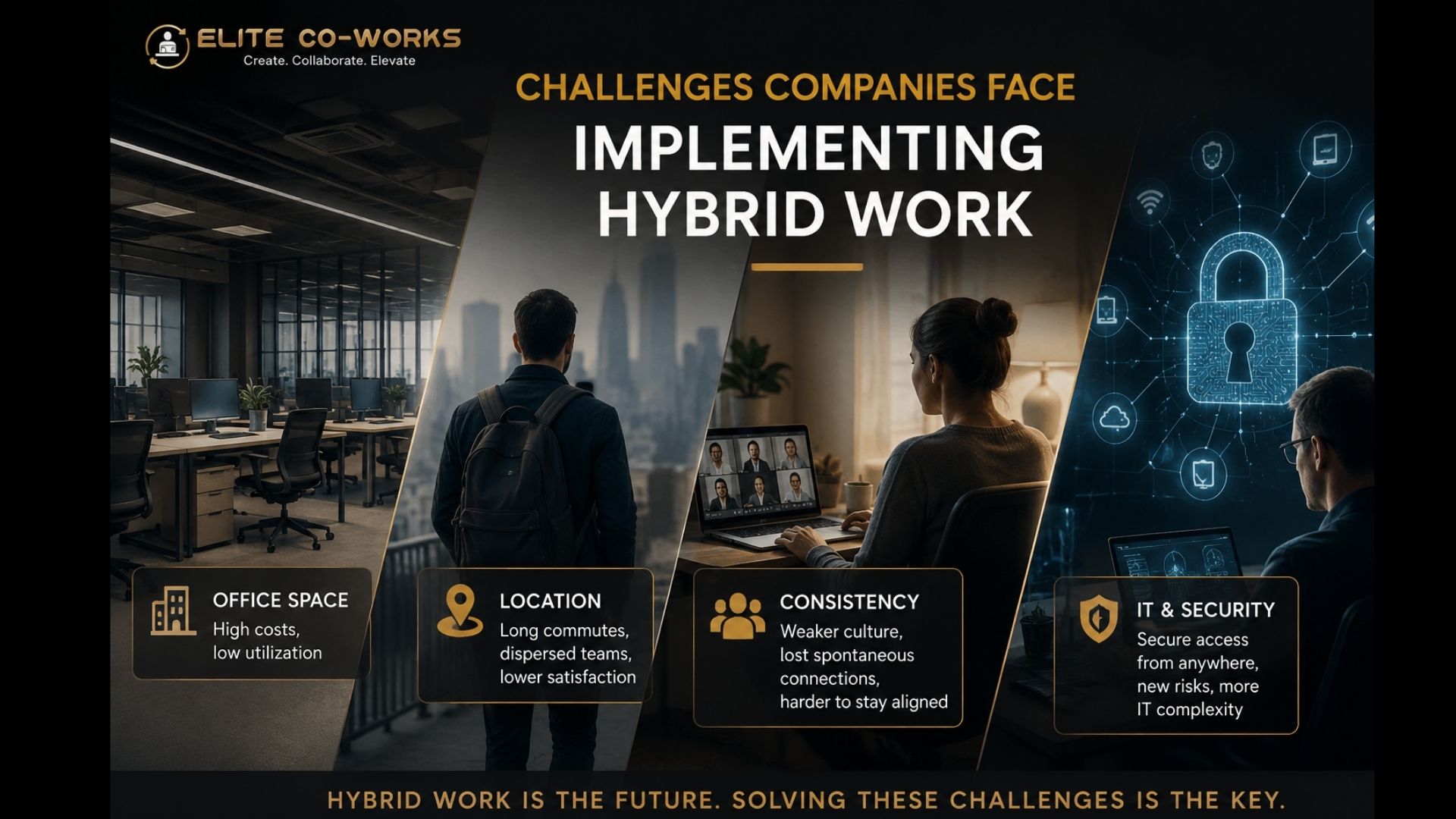
Office space becomes this awkward math puzzle nobody signed up for. Keep the big office even though half the desks sit empty most days, quietly burning rent on nothing? Or shrink it, and then scramble every time more people show up than expected, with folks standing around because there just aren’t enough desks? Neither option feels good. A lot of companies end up overpaying for space that sits mostly unused through the week, which, honestly, is one of the more frustrating parts of running a hybrid setup from a facilities point of view.
Location’s another headache. Employees are scattered across a city, sometimes across cities, and one centralized office stops making sense for most of them. Someone commuting 90 minutes to sit on a laptop for a few hours isn’t exactly thrilled about the whole arrangement, and who could blame them. That kind of resentment builds quietly, and it chips away at how people feel about “office days” even when the actual work is perfectly fine.
Then there’s consistency, or the lack of it. Teams bouncing between home, a cafe, some coworking spot this week, the actual office next week, tend to lose that shared sense of “this is where we work.” Culture gets harder to hold together without a stable, familiar space anchoring people. Those little spontaneous chats near the coffee machine, or while waiting for a meeting room to free up? Mostly gone. A lot of companies underestimate just how much of their culture ran on those small, unplanned moments until they disappear.
And IT and security throw in another layer nobody enjoys. Making sure people can securely get into company systems from a dozen different spots- home routers, random cafes, coworking desks- wasn’t something most companies had properly sorted before hybrid became the default.
A handful of things end up mattering more than the rest once a team’s actually using a space regularly, not just visiting it once for a demo.
Flexible desk and cabin bookings let teams scale their footprint up or down week by week, rather than being stuck with one fixed layout that either wastes space or runs out of it depending on the day.
Meeting rooms and conference areas give hybrid teams somewhere to actually gather in person when it counts, without needing a whole dedicated office sitting mostly empty the rest of the week just for that one weekly sync.
Reliable, fast internet is basically non-negotiable at this point, no way around it. Hybrid teams live on video calls, and a coworking space built for this kind of work treats connectivity as the baseline, not something to worry about later.
Multiple locations across a city let a company offer remote work office space near wherever employees actually live, instead of pushing everyone toward one central address that only really works for people nearby.
And honestly, a properly maintained, professional space, good seating, working AC, and a decent pantry make coming in feel worth the trip, instead of something people quietly dodge whenever they can get away with it.
Here’s what a lot of people miss when they think about hybrid purely in terms of happier employees. Get the setup right, and it actually helps productivity too, not just morale.
Employees get quiet, focused space when they genuinely need to get something done, without ten Slack pings and a chatty neighbor interrupting every few minutes. They get real face time with the team when something actually calls for being in the same room. And they get to decide which one makes sense on any given day, instead of some rigid, one-size-fits-all schedule making that call for them, regardless of what the actual work needs.
For companies, it means real estate costs that scale with actual usage instead of some fixed number decided years back and never revisited since. It also opens up hiring beyond a five-kilometer radius from headquarters, since a distributed hybrid work coworking setup makes the commute question basically a non-issue when you’re deciding who to hire.
Put together, hybrid work paired with coworking isn’t really some compromise between remote and in-office. It’s arguably a better version of both, minus most of the baggage either one carries alone.
This is exactly where a coworking space for a hybrid work setup starts looking a lot more appealing than people expect going in.
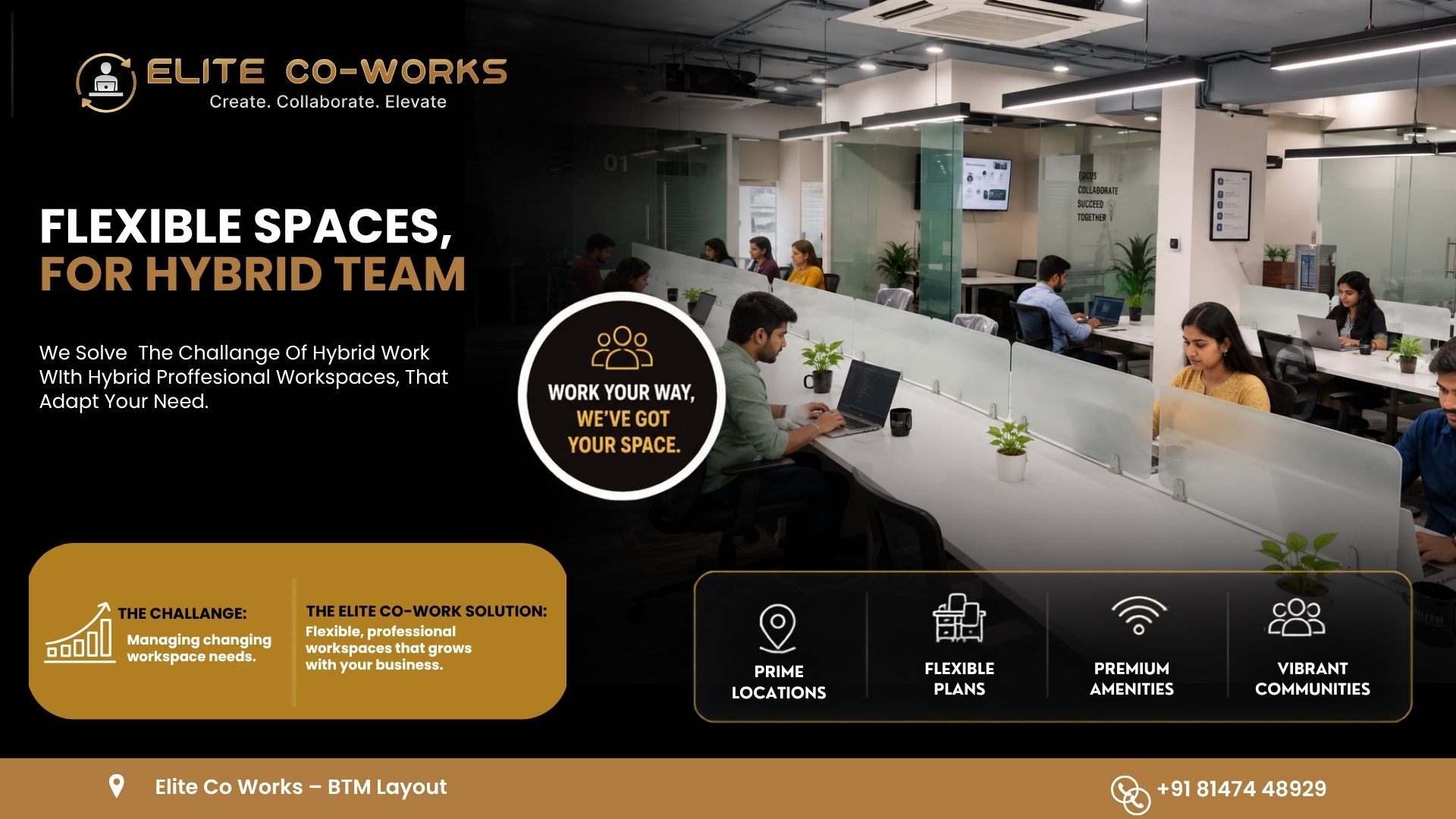
Flexibility’s the obvious one. Instead of locking into one big, fixed office sized for a headcount that shifts week to week, companies can book desks and choose what they actually need. At Elite Co Work, that would mean using flexi desks when only a few employees come in, fixed desks for people who regularly work from the space, or private cabins when a team needs more privacy. Businesses can now scale their workspace around their actual needs instead of paying for desks that sit empty most of the week.
Location helps more than people give it credit for. Elite Co Works is based in BTM Layout, close to Koramangala and HSR, making it more convenient for employees who may not want to travel to one central office every day.
The infrastructure also solves many practical challenges. Elite Co Works offers high-speed internet, power backup, meeting rooms, conference facilities, and 24/7 security, giving employees everything they need without the company managing it all.
Most importantly, Elite Co Works supports flexible hybrid work through shared desks, private cabins, and virtual office services, making it a practical solution for growing businesses.
Hybrid work isn’t going anywhere, and the businesses that figured that out early are the ones building smarter, more flexible setups around it instead of squeezing an old-school office model onto a workforce that’s clearly moved past it. Coworking spaces fit that shift almost perfectly, offering flexibility, location coverage, and amenities a traditional, fixed office just can’t match anymore.
If your team’s already hybrid, or you’re weighing the move, it’s worth actually seeing what a coworking setup could look like for your team specifically, instead of assuming a regular office is still the safer default by habit. Book a tour or a quick consultation and see how it feels before locking anything in for the long term.
What is a hybrid working model? A hybrid working model is a setup where employees split their time between working from home and working from an office, rather than being fully remote or fully in-office all the time.
Why are coworking spaces a good fit for hybrid teams? They offer flexible desk bookings, multiple locations across a city, and ready-made amenities like meeting rooms and reliable internet, without a company having to commit to one large, fixed office space.
Do coworking spaces support fully remote employees too? Yes. Most coworking spaces work well for remote employees too, giving them a proper workspace outside the house whenever they need one, without being tied to a permanent desk in a single company office.
Is hybrid work more productive than fully remote or fully in-office? It can be, since employees get to choose focused solo time versus in-person collaboration based on what a task actually needs, instead of a fixed schedule deciding it for them no matter what the work involves.
How do companies manage office costs with a hybrid coworking setup? Costs typically scale with actual usage, desks or cabins booked as needed, instead of paying for a large, mostly empty office all week regardless of how many people actually show up.
Workspace starts @ INR 5000*/month
Modern, Affordable & Flexible Workspace Solutions For Your Business
Workspace starts @ INR 5000*/month